Hinterlands Canon Class of 2026: Part 3
Welcome back to the Hinterlands Canon Class of 2026!
If you don't know what the Hinterlands Canon is, check out Hinterlands Zine #1 (Available Here) for an overview and check out the list in its entirity here, or by clicking the link in the navigation bar at the top of the page.
If you haven't read the rest of the Class of 2026 coverage, check out the links to my other coverage below:
- Class of 2026 Blog Part 1
- Class of 2026 Blog Part 2
- Class of 2026 Blog Part 4
- The Hinterlands' 'Best Reads of 2025' Youtube Video
Presenting the Hinterlands Canon Class of 2026:
- The History of the Runestaff Series by Michael Moorcock - Hinterlands Zine #1
- Peace by Gene Wolfe - Review+
- Holy Fire by Bruce Sterling - Best Reads of 2025 Video
- Dhalgren by Samuel R. Delany - Best Reads of 2025 Video
- Roadside Picnic by Arkady and Boris Strugatsky - Best Reads of 2025 Video
- The Knight/The Wizard by Gene Wolfe - Best Reads of 2025 Video
- The Chronicles of Amber by Roger Zelazny - Class of 2026 Blog Part 1
- Berserk by Kentaro Miura - Class of 2026 Blog Part 1
- Nausicaä of the Valley of the Wind by Hayao Miyazaki - Class of 2026 Blog Part 1
- The Books of Earthsea by Ursula K. Le Guin - Class of 2026 Blog Part 2
- Delicious in Dungeon by Ryoko Kui - Class of 2026 Blog Part 2
- Fist of the North Star by Buronson and Tetsuo Hara - Class of 2026 Blog Part 2
- Red Mars by Kim Stanley Robinson - Class of 2026 Blog Part 3
- The Incal by Alejandro Jodorowky and Mœbius- Class of 2026 Blog Part 3
- Dorohedoro by Q Hayashida - Class of 2026 Blog Part 3
- The Martian Chronicles by Ray Bradbury - Class of 2026 Blog Part 4
- Hunter X Hunter by Yoshihiro Togashi - Class of 2026 Blog Part 4
- YuYu Hakusho by Yoshihiro Togashi - Class of 2026 Blog Part 4
The new inductees (Part 3 of 4):
Red Mars by Kim Stanley Robinson
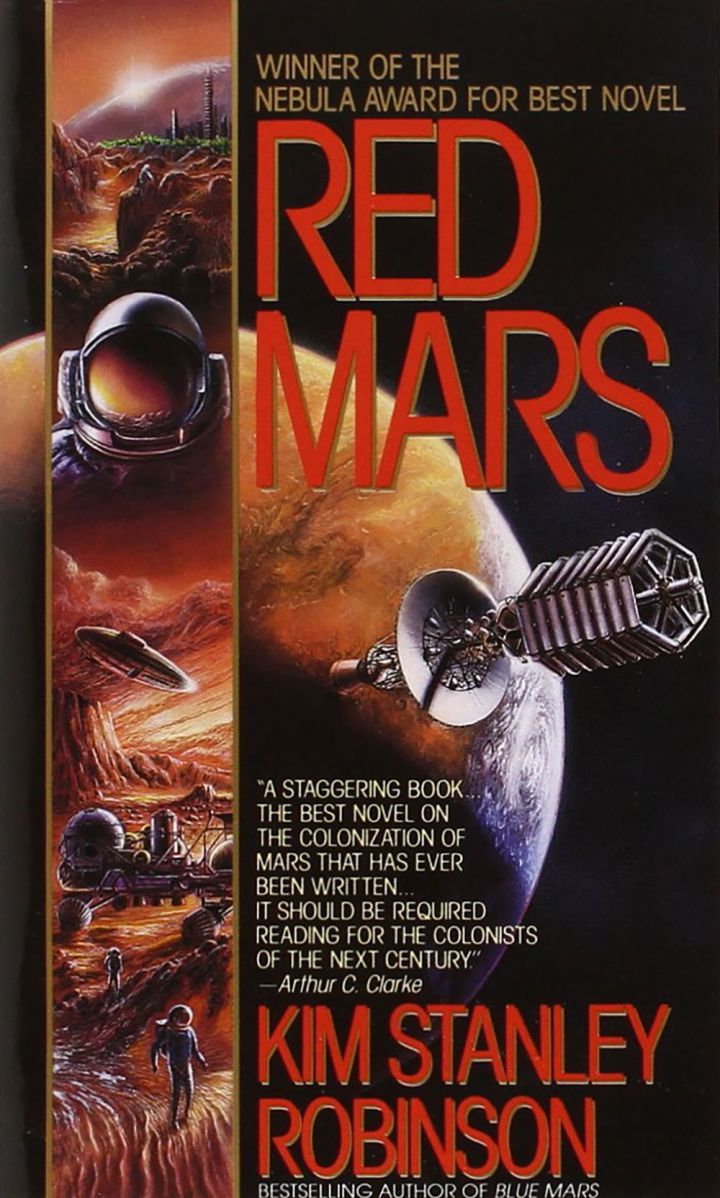
Kim Stanley Robinson’s Red Mars, for all its hard science grounding, studied attention to human nature, and thoughtful speculation about the effects of extreme situations on the psyche, is a dream of a future that came and went. This is a Mars for the end of history, a Mars colonization mission spearheaded by a global neoliberal capitalist hegemony that was going to last forever. This was a future that was never possible, even as it was believed to be both inevitable and eternal.
I don’t say this as a criticism of Red Mars. Robinson does not suggest the dominance of global capital to be a necessarily positive state of affairs, just that it would be a stable and lasting one. (Le Guin had a quote about this mindset that said something about the reigns of kings…) The book in fact opens with an act of terrorism against a Martian domed city, and much of the story deals with ethical concerns about the human development of mars, with the grim understanding that as much talk as there may be about international commissions and preservation councils, ultimately these decisions will be made by the interests of capital, not the people who think and care about mars, space, or anything other than infinite growth and consumption.
While the complicated relations between humans and the red planet shape the course of the book, much of the page-to-page reading experience is a delivery mechanism for the type of “hard science fiction of competence” that made up the treasure trove of 50s science fiction. Robinson’s narrative trick in this book is to take a broad survey of developing technology/research in a variety of fields and expanding that outwards linearly. The result is a work of fiction that feels intensely realistic in its moment, but over time becomes a kind of retrofuturism, in its way not so different from the visions of Martian Canals in the science fiction of the late 19th and early 20th centuries. Again, this is not a criticism! All fiction carries with it the beliefs and expectations of its own time of production in one way or another, and this book paints a picture of both its present as well as its future.
Much of the book concerns the scientists and engineers who are sent up as the first wave of Mars colonists, to begin building bases and the like to prepare the Red Planet for full on colonization. We follow them through the selection process, the long years in space, landing, and dispersal as they get to work, then regroup with them years later after Mars has become the darling of the moment and they’re all celebrities of a kind. The intense intimacy of these people and how their relationships to each other and to Mars evolves over the course of the book is the heart of the story. The book lives in their battles over and dreams of what Mars can or should be, the choices they ultimately make, and the choices that are made for them.
The overall tone of this book is not the scientific techno-optimism that sometimes gets associated with hard SF as a sub-genre. Instead, the book feels like a funeral dirge for the pre-human mars. A love letter to mountains of red dirt and ice, a ballad for cold winds across dry ocean beds. Through all these conversations characters have about the ethics of terraforming, what humans have the right to do to other planets, what rights dead or uninhabited worlds have to be left in peace, there is an understanding that no ethics, no terrorism, no human effort can stop what’s coming. Mars is going to be forever changed. It’s the logic of the end of history, and Robinson leaves his characters who love the Red planet as it was to stare down the same gun barrel that killed the Eastern Bloc. From his writing desk in 1991, no doubt it seemed like that force would roll up the whole world and space as well. Looking back at this fantasy of the future from our position in 2026 I don’t know if it was dystopian or utopian, but it just a dream either way.
P.S. - on the Mars Trilogy
You may have noticed I’m only inducting Red Mars when this is famously a trilogy – I haven’t read the other two books yet! I’m dedicated to collecting a matching set of paperbacks with good covers rather than buying one of the very ugly new printings. I have Green Mars, and have been hoping I would come across Blue Mars at a used book store, but I’ve been looking for long enough now that maybe I need to just bite the bullet and overpay for a copy online. Anyway – I hope to have read the rest of the trilogy by the end of the year. Maybe the full trilogy will be inducted into the Canon this time next year. Or maybe not.
The Incal by Alejandro Jodorowky and Mœbius
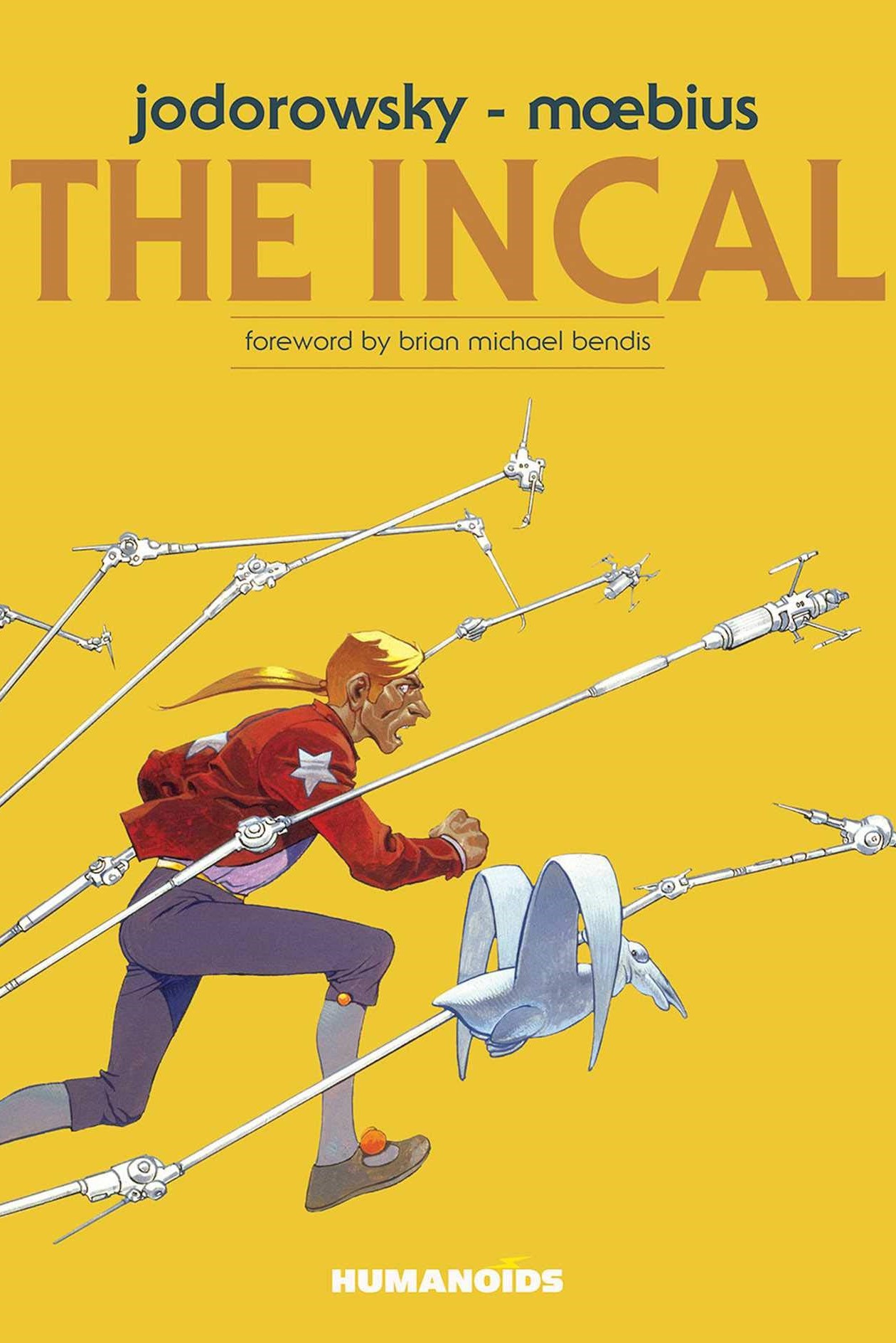
Let’s be real: The Incal is better than Jodorowsky’s Dune ever could have been. The death of Jodorowsky’s long gestating adaptation of Dune (which spawned a million other movies, most notably Alien and Star Wars, as well as the documentary Jodorowsky's Dune) led to many of his ideas being reinterpreted into the graphic science fiction odyssey The Incal, illustrated by legendary French artist Mœbius.
The strength of The Incal as both a science fiction story and as a comic is Jodorowsky’s position as not a science fiction writer but first and foremost a Film Artist, a man concerned with ideas and images, philosophy, spirituality, and the soul. He’s less concerned with Science, Logic, and the trappings and history of classic adventure stories. With the addition of Mœbius, who brings Jodorowsky’s madness to life with his unique vision and style, as beautiful today as it ever was, The Incal is a unique and compelling art object, at once low brow and high brow, Pulp Art at its finest.
The Incal is the story of a loser private investigator in a mega-city of the far future falling to his death. Somehow he not only survives but gets wrapped up in a non-stop rollercoaster chase sequence around and through the underworld and undercity, through the dark hivepods of the tekcore, and off into space, upon jellyfish inhabited prison hell worlds and more! Its a rollicking adventure centered around a central conflict between the annihilating desire to mindlessly consume and devour and the hope and prayer that human beings can aspire to something greater.
The strength of the ideas within the Incal is the special sauce that holds the whole thing together. You have the dual natured Immortal Emperoress, the aforementioned sentient jellyfish, the anti-life black sun devouring the universe, the planet of clone doubles - all incredible.
What makes the Incal feel unique beyond Mœbius’s signature gorgeous art and colour is Jodorowky’s commitment to big ideas. He does not care about subtlety, he does not care about lore, (this is somehow both entirely true and entirely untrue – while being unquestionably unconcerned with internal consistency or logic he has also written something like 50 spin-offs, sequels, and prequels set in the Incal universe), and he is primarily concerned with overriding themes and metaphors which he will repeatedly have characters state outright in the plainest language possible, to the point where they might as well be addressing the reader directly. To be clear, this rocks. The Incal is one of the greatest works of Science Fiction of all time.
Dorohedoro by Q Hayashida

Dorohedoro is the story of a man named Caiman who’s been turned into a crocodile person by a sorcerer. He lives in a place called The Hole with his friend Nikaido, where it constantly rains because of the fumes released by Sorcerers who come down to the hole to test their spells on the helpless inhabitants. Caiman and his friend catch sorcerers and shove their heads in caiman’s mouth, where a man that lives in caiman’s throat looks at their face and confirms whether or not the sorcerer in question is the one that turned Caiman into a lizard.
This premise is established from the very beginning of the comic, and clearly lays out the three core strengths of Dorohedoro: the setting, the characters, and the central mystery of who Caiman is. Beginning with the setting, The Hole and its counterpart, the world of Sorcerers, are evocative dual worlds. The Hole is dour, polluted, overcrowded, and full of constant danger. Situations like the annual event where the dead rise and have to be exterminated have become common place. Residents are so beaten down by their oppressed status that they simply accept it - making Caiman and his friend’s rhetorical position as tough sorcerer killers a breath of fresh air. On the other hand the world of the sorcerers is seen largely through the eyes of a major crime boss and his henchmen, enhancing the feeling of the place as a surreal wonderland where anything can and does happen. But life is cheap there too, and we get comical exposure to this fact through the eyes of a lowly henchman with limited sorcerous ability forced to perform menial errands.
This brings us to the second strength of Dorohedoro - the characters. For such a long running comic, the series largely sticks to a core cast of characters established fairly early, with the relationships they develop over the series’s run keep the reader coming back throughout. From En’s various subordinates to the many residents of the Hole including a giant cockroach who plays baseball, the strange and charming weirdos that populate this world make it feel like a vast and detailed place.
Finally, the series is centered on the central mystery of who Caiman was before he was turned into a lizard. This mystery starts out compelling but like most central mysteries, eventually starts to run out of steam. A fun trick of the story is that the reader falls in love with the central relationship between Caiman and Nikaido, and we begin to crave the opposite of what Caiman wants: for the truth to stay hidden. Readers begin to yearn for the status quo to return, for Caiman to eat gyoza and have adventures with Nikaido. Q Hayashida deliberately creates that desire and leaves it unfulfilled - bold and powerful storytelling.
NEXT TIME
In the fourth and final part of this series, we induct a very different classic Mars novel* as well as the two most famous works by one of the greatest authors of Shonen Manga to ever lift a pen.
Link and Recommendations:
If you haven't read it yet my first Zine, Hinterlands #1, is available free on itch here.
Check out my first ever booktube video! A new video about my favorite reads of January and February is coming soon.
I've been reading a lot of short stories lately! I'm sure I'll be talking more about them soon, but in the meantime here are links to some of my favorites: