Hinterlands Canon Class of 2026: Part 4
Welcome back to the Hinterlands Canon Class of 2026! It's the last one!
If you don't know what the Hinterlands Canon is, check out Hinterlands Zine #1 (Available Here) for an overview and check out the list in its entirity here, or by clicking the link in the navigation bar at the top of the page.
If you haven't read the rest of the Class of 2026 coverage, check out the links to my other coverage below:
- Class of 2026 Blog Part 1
- Class of 2026 Blog Part 2
- Class of 2026 Blog Part 3
- The Hinterlands' 'Best Reads of 2025' Youtube Video
Presenting the Hinterlands Canon Class of 2026:
- The History of the Runestaff Series by Michael Moorcock - Hinterlands Zine #1
- Peace by Gene Wolfe - Review+
- Holy Fire by Bruce Sterling - Best Reads of 2025 Video
- Dhalgren by Samuel R. Delany - Best Reads of 2025 Video
- Roadside Picnic by Arkady and Boris Strugatsky - Best Reads of 2025 Video
- The Knight/The Wizard by Gene Wolfe - Best Reads of 2025 Video
- The Chronicles of Amber by Roger Zelazny - Class of 2026 Blog Part 1
- Berserk by Kentaro Miura - Class of 2026 Blog Part 1
- Nausicaä of the Valley of the Wind by Hayao Miyazaki - Class of 2026 Blog Part 1
- The Books of Earthsea by Ursula K. Le Guin - Class of 2026 Blog Part 2
- Delicious in Dungeon by Ryoko Kui - Class of 2026 Blog Part 2
- Fist of the North Star by Buronson and Tetsuo Hara - Class of 2026 Blog Part 2
- Red Mars by Kim Stanley Robinson - Class of 2026 Blog Part 3
- The Incal by Alejandro Jodorowky and Mœbius- Class of 2026 Blog Part 3
- Dorohedoro by Q Hayashida - Class of 2026 Blog Part 3
- The Martian Chronicles by Ray Bradbury - Class of 2026 Blog Part 4
- Hunter X Hunter by Yoshihiro Togashi - Class of 2026 Blog Part 4
- YuYu Hakusho by Yoshihiro Togashi - Class of 2026 Blog Part 4
The new inductees (Part 4 of 4):
The Martian Chronicles by Ray Bradbury
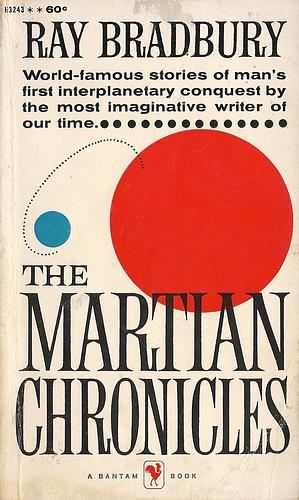
As a fix-up novel compiling Bradbury’s Mars stories, The Martian Chronicles reads more like a short story collection than a novel. Besides theoretically taking place across a unified continuity of humanity’s colonization of mars, the stories are also tied together by a feeling of sublime sadness directed at humanity, both in terms of our relentless environmental and destruction and our wars, but also something deeper, an impossible search for a return to innocence, the undoing of death, the idea of starting fresh, free from history.
Like most short story collections, this has highs and lows, and here the highs are extremely high and the lows extremely low. One high note is There Will Come Soft Rains, one of Bradbury’s most famous short stories of all time, and not really a mars story at all. It tells the story of a smart home in the era after humans have destroyed themselves, continuing to run on decades after its inhabitants have died. It’s a melancholy story of the day to day actions of an empty home, as well as the relationship between the house and the animals that have re-inherited the earth, and finally the ultimate death of the house itself. Its a little maudlin, but I like it, and you can see why the story has endured. Bradbury’s depiction of humanities inventions carrying out their little automated routines on their own is bittersweet, melancholy, and comic all at once.
My personal favourite among the stories is The Martian, also a classic, reprinted in the Vandermeer’s Big Book of Science Fiction (among many other anthologies). It’s the story of humans on mars encountering a martian, a being that becomes a double of absent people from the lives of humans who encounter it, a long lost son, a lover, and more. The humans are unable to allow the martian to settle into a single identity, each demanding it be their lost person, and soon the creature is torn apart by the competing desires of the town.
I also quite like Night Meetings, which is a very short story about a human from the era of colonization and a martian from the peak of martian civilization (presumably centuries if not millennia earlier) crossing paths on a dusty road late at night and proceeding to argue about which of them is the ghost and which is real.
There are lows of course, and some of Bradbury’s negative tendencies which would go on to define his whole personality in his later years occasionally peek through. There’s a whole story which builds up to a misogynist punch-line, and another story about race which I think has its heart in the right place but I’m not sure if it’s entirely successful.
The Martian Chronicles is strikingly different from other science fiction of the era, a less serious, more satirical view of science fiction, filled with both humour and cynicism. It strikes me as likely influential to later authors like Douglas Adams and Terry Pratchett who similarly combine humour with speculative fiction. Bradbury has a soft and melodic writing style unlike many of his contemporaries, and his unique voice keeps The Martian Chronicles singing today, even if it has weak points that make it uneven overall.
Hunter x Hunter by Yoshihiro Togashi
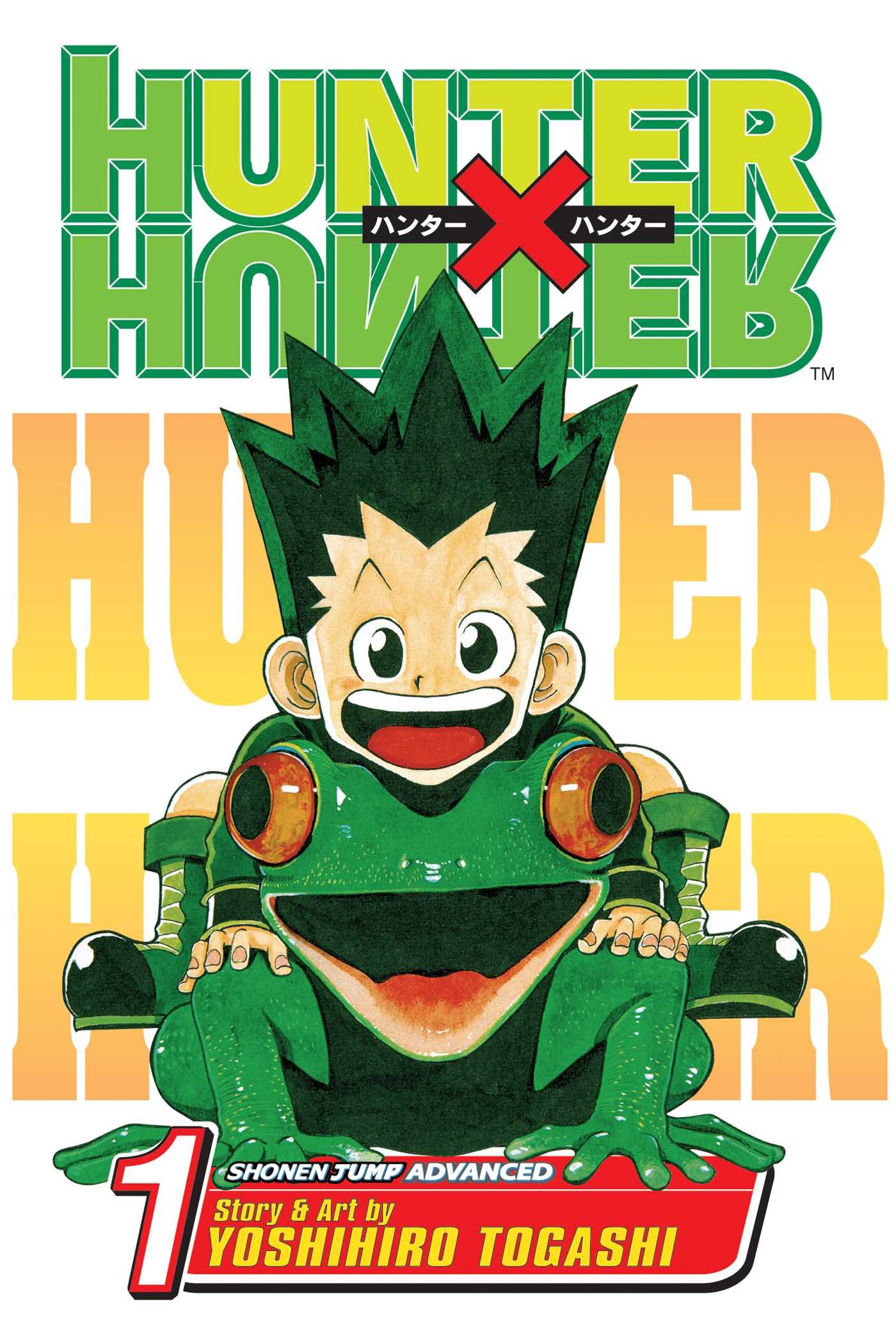
I spent a lot of time in a previous blog post talking about the tradition of Shonen Battle Manga established by Dragon Ball Z. In some ways Hunter x Hunter is the pinnacle of that genre, while also being a deconstruction of it. Togashi, a veteran of the genre, uses a loose Arc structure inspired by Dragon Ball Z and its offspring, but ultimately creates much more complicated narrative structures and character relationships within the battle manga framework. He frequently dispenses with the idea of “big bads” or “character strength progression”, and when he does engage with these genre tropes he engages with them in deliberately provocative ways, flipping or defying expectations.
Hunter X Hunter is the story of a young boy named Gon Freecs, who wants to become a Hunter, a licensed profession with a wide range of sub-divisions with job descriptions that range from assassin to archeologist. Gon wants to be a hunter so he can find his dad, who left when he was a baby, leaving him to be raised by his aunt on a strange isolated island where he grew up befriending and eating the local mega-fauna.
The first story arc revolves around the hunter licensing test, which is elaborate, dangerous, and is itself composed of numerous sub-arcs, each of which works its way through various genre tropes and expectations. Over the course of the manga, Gon makes a number of friends and enemies, each of whom has their own goals and motivations, some of which get explored in great detail. Togashi is aggressively unafraid of moving the story away from his youthful protagonist for long periods, having extended arcs focusing on the stories of Gon’s companions, or even his enemies, with a high powered gang of killers called The Phantom Troupe carrying extended sections of the manga largely on their own.
When the story does return to Gon, Togashi continues to toy with what kinds of stories can be told in the genre. A long and elaborate arc is set entirely within an in world video game, with its own set of elaborate rules (including an excuse to do minimal art for several pages - save your body king).
Finally, the pinnacle of the series (thus far! Togashi is semi-retired due to serious injuries he’s sustained toiling over a desk for decades, but new chapters of Hunter X Hunter have begun trickling out over the last few years. I wish him healthy, pain-free living first and foremost, and whatever additional chapters of Hunter X Hunter we receive over the coming years are icing on the cake) is the chimera ant arc, a story about a species of insects that incorporate characteristics of the animals they feed on into their young. Once they start feeding on humans, very quickly they become stronger and smarter than even the Hunters, and too fast for anyone to react they become a world ending threat. This is Togashi bringing Hunter X Hunter up to the scale of threat Dragon Ball Z dealt with from the very beginning, and he channels the genre’s origins with aplomb, finally realizing a central world ending villain who is unquestionably a tribute to DBZ’s Frieza. However, the way he uses that character is so unique for the genre that even in pastiche, the character is a high water point in shonen manga. This villain, Meruem, is an avatar of supreme entitlement and cruelty, who comes to an awakening of empathy and love, while simultaneously Togashi’s counter-avatar of human ability and power declares humans’ most powerful trait to be their capacity for spite and vengeance. Its an incredible one two punch that raises an already excellent series to all-timer status.
YuYu Hakusho by Yoshihiro Togashi
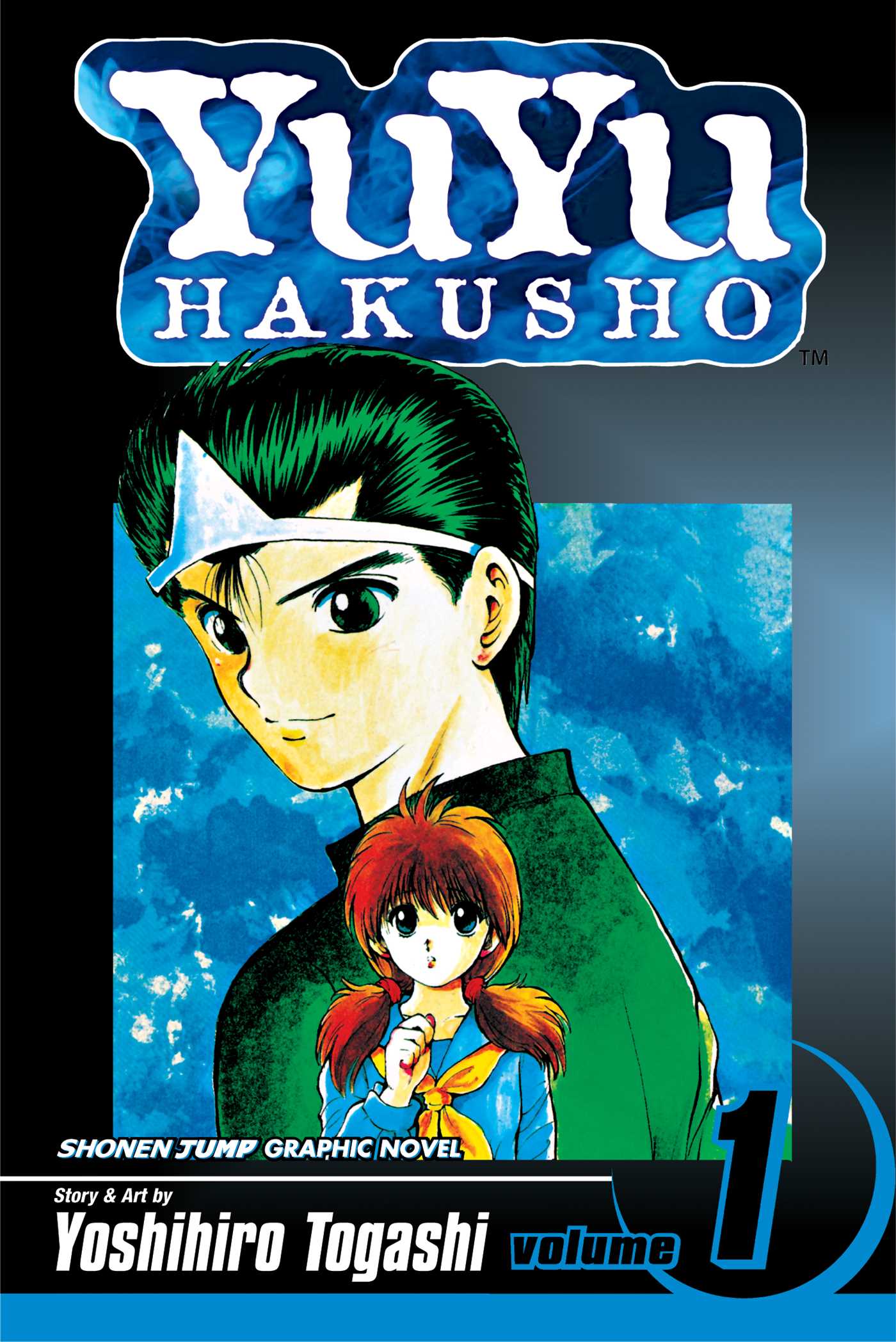
When I was in elementary school, Shonen Jump, the beloved Japanese comics magazine for teen boys, began publishing a monthly English language volume in North America. The comics that launched the series are a who’s who of some of the greatest manga ever in the Shonen Genre: Dragon Ball Z, Yu-Gi-Oh, Naruto, One Piece, Shaman King, and YuYu Hakusho. Dragon Ball Z and Yu-Gi-Oh had tv show pedigrees, Naruto quickly became a phenomenon, One Piece was to discerning readers The Best series in the magazine, Shaman King…well, I liked Shaman King, but Yu Yu Hakusho was The Coolest.
YuYu Hakusho is the story of a Japanese teenage delinquent who gets hit by a car after diving in front of it to push a little kid out of harms way. When he goes to the afterlife, he’s told that he was on track to go to hell, but his last minute act of self-sacrifice has put him at True Neutral karma status. They don’t know what to do with him, so they end up sending him back to earth as a Spirit Cop, to work off his karmic misdeeds and earn the right to go to heaven.
While many of the series listed above are dark, I think YuYu Hakusho is the darkest of the bunch. The villains of the series are either grotesque demons who eat human souls or they’re rich and powerful humans who alternately employ and torture those demons for their own personal profit. There’s a strain of both cynicism and white hot anger for the cruelty of the powerful at the expense of the weak that runs throughout YuYu Hakusho, which is one half of its power. The other half? Sheer cool factor. Those early issues of Shonen Jump had lots of cool villains, anti-heroes, and characters who went from one to the other. Naruto had Zabuza and Gaara (not to mention Sasuke), there was Roronoa Zolo in One Piece, and of course Vegeta is kind of the originator of all these characters. YuYu Hakusho had Hiei. Hiei is a human killing demon with a third eye, a sword, and a demonic black flame that ate away at the soul of the user even as it scorched its victim out of reality. What could be cooler?
To me, the peak of YuYu Hakusho and the reason it’s in my canon is the Dark Tournament arc, probably the greatest fighting tournament story in shonen manga. It centers on the Toguro Brothers, humans who have corrupted their souls with demonic energy in their quest for increasing power, and their sponsors, a psychopathic nihilist whose only desire is to built a gateway to the demon world large enough to admit the truly powerful demons, the ones that can devour and enslave all of humanity with the snap of their fingers. It introduces a ton of memorable characters with unique powers, uses the tournament format to reveal a huge number of secret powers, hidden abilities, and ‘true forms’ of beloved characters, and raises the stakes for the series as a whole in a way that still sticks with me, all these years later. Oh yeah, and Togashi here introduces a technique he would go on to master in Hunter X Hunter: the loving tribute to/one-upping of Dragon Ball Z, as the tournament contains a riff on the classic “Goku’s weighted training gear” scene that still makes me smile.
Link and Recommendations:
If you haven't read it yet my first Zine, Hinterlands #1, is available free on itch here.
Check out my first ever booktube video! A new video about my favorite reads of January and February is coming soon (god I hope it's up soon - I've been too busy working on a Zine project to edit it - but it is recorded!)
- Read Jake's Atlantic piece about movies that feel like NOW - Loved reading this as I've been thinking along similar lines - see my blog about Eddington and Weapons.
- Not going to bother with a link but we've been watching The Pitt season 2 and it rules, check that out.
- I know I wrote a whole third of a blog post about how good Vinland Saga is, but I'll say it again: Vinland Saga is good. Read it! Okay bye!