Hinterlands Canon Class of 2026: Part 1
Welcome to the Hinterlands Canon Class of 2026!
In case you missed my zine (read the zine!), I introduced something I called The Hinterlands Canon, a list of novels and comics that fall under the broad umbrella of Speculative Fiction that I personally think are good enough, important enough, or influential enough on my own work to merit collection and curation on this website. See the zine (Available Here) for a more thorough description, and check out the canon in its entirity here, or by clicking the link in the navigation bar at the top of the page.
I’ve been trying to figure out for a while what I’m actually going to DO with the Hinterlands Canon, now that I’ve officially added it to the website. Here’s how it’s going to work: at the start of each year, I’ll round up all the stuff that I either read in the past year and induct it into the hall as a Class. That means that the class of 2026 will largely consist of work I read in 2025. Many of these works will already have reviews from me somewhere else, either on the site, or in a youtube video (stay tuned!). But those that I haven’t discussed before will get a brief write-up.
This year, I have the additional task of including new entries that were overlooked in my inaugural class. I made the conscious decision to exclude works that I read as a teen and want to re-read before endorsing, but there were a number of works I read in the past 5 years that were overlooked, and those I will induct now as part of Class of 26. Hopefully that should solve the Overlooked problem for good, and I won’t find myself inducting more “overlooked” bangers in future years – but I won’t rule it out.
Presenting the Hinterlands Canon Class of 2026:
- The History of the Runestaff Series by Michael Moorcock - Hinterlands Zine #1
- Peace by Gene Wolfe - Review+
- Holy Fire by Bruce Sterling - Best Reads of 2025 Video
- Dhalgren by Samuel R. Delany - Best Reads of 2025 Video
- Roadside Picnic by Arkady and Boris Strugatsky - Best Reads of 2025 Video
- The Knight/The Wizard by Gene Wolfe - Best Reads of 2025 Video
- The Chronicles of Amber by Roger Zelazny - Class of 2026 Blog Part 1
- Berserk by Kentaro Miura - Class of 2026 Blog Part 1
- Nausicaä of the Valley of the Wind by Hayao Miyazaki - Class of 2026 Blog Part 1
- The Books of Earthsea by Ursula K. Le Guin - Class of 2026 Blog Part 2
- Delicious in Dungeon by Ryoko Kui - Class of 2026 Blog Part 2
- Fist of the North Star by Buronson and Tetsuo Hara - Class of 2026 Blog Part 2
- Red Mars by Kim Stanley Robinson - Class of 2026 Blog Part 3
- The Incal by Alejandro Jodorowky and Mœbius- Class of 2026 Blog Part 3
- Dorohedoro by Q Hayashida - Class of 2026 Blog Part 3
- The Martian Chronicles by Ray Bradbury - Class of 2026 Blog Part 4
- Hunter X Hunter by Yoshihiro Togashi - Class of 2026 Blog Part 4
- YuYu Hakusho by Yoshihiro Togashi - Class of 2026 Blog Part 4
- Class of 2026 Blog Part 2
- Class of 2026 Blog Part 3
- Class of 2026 Blog Part 4
- The Hinterlands' 'Best Reads of 2025' Youtube Video
And now, Presenting the new inductees (Part 1 of 4):
The Chronicles of Amber by Roger Zelazny
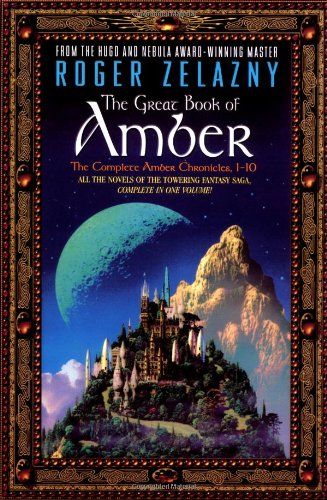
One of the caveats I made in my discussion of why some works were or were not included on the Hinterlands Canon was that there were many works I had read that could be added to the canon, but it had been so long since I read them that I wasn’t sure whether they belonged on the list or not, and that I would undertake a project of re-reading them. Another factor involved was that I didn’t want the initial class to be excessively long, I wanted it to be a sampling and also to consist only of works that I felt were without question deserving of their place on the list. The absence of The Chronicles of Amber from the initial class probably has more to do with that second criteria than the first. Having just read the entire series in 2024, I don’t see myself needing to re-read it in the immediate future, and as an unfinished elaborate mess of a creation I think probably I felt it was too uneven to receive the maximum endorsement that the Inaugural Class represented to me at the time. But hell, that was like, four months ago. I was a different guy back then.
My approach to the hall now in my mind is something more like a maximalist approach. That doesn’t mean I’ll be chucking every old thing in willy-nilly - for example I stand by my position on leaving Michael Moorcock’s Behold the Man out of the Canon, even though I enjoyed that book and do recommend it to the discerning reader. But Chronicles of Amber fulfills two of the important criteria for the canon that make it worthy of entry, setting aside the third criteria for now (that being, it’s my canon, and I can put whatever I damn well please into it).
The first criteria is whether the stories contain a quality of writing, storytelling, etc that I want to capture in my own writing - this is a criteria Amber meets handily. The stories of Amber are pulpy action-adventure stories in a fantasy milieu that work their way through innumerable scenarios in rapid succession, flowing from one to the next without getting bogged down in minutiae. In just the first book Zelazny packs in car chases, duels on horseback, sword fights with evil siblings, undersea kingdoms, a siege up a giant staircase, and more all in under 200 pages. It never feels rushed even though we hardly stop to breathe throughout, it always flows naturally. This storytelling mode is something that I try to capture in my own writing, a reminder to lead with action. Put the characters in a tough spot and make them get out of it, they scrape by on the skin of their teeth and that drops them into the next tough spot and so on. You can build a whole story that way and Zelazny does it beautifully in Amber.
Amber is a world about an infinite multiverse, where everything can and does exist in the realm of shadow. Earth and an infinite multitude of other worlds are only faint shadows cast by the One True Realm of Amber, the city and castle at the heart of existence. Oberon, God King of Amber has disappeared, and his many children are warring across reality for the rulership of Amber. Zelazny squeezes this conceit for all its worth, genre and world hopping to his heart’s content, and slowly unveiling a mystery built around the children of a vanished god patriarch who carved a universe of grand beauty and order from the roiling vortex of chaos that birthed him. The universe is held together by a strange sigil that has within its curves the universe itself. You must walk the path, to earn your powers as a child of amber, but to falter in the attempt is to be seared from reality itself. It’s cool basically, and Zelazny’s forthright and confident prose keeps the story going as all manner of strange plot twists and turns occur.
Berserk by Kentaro Miura
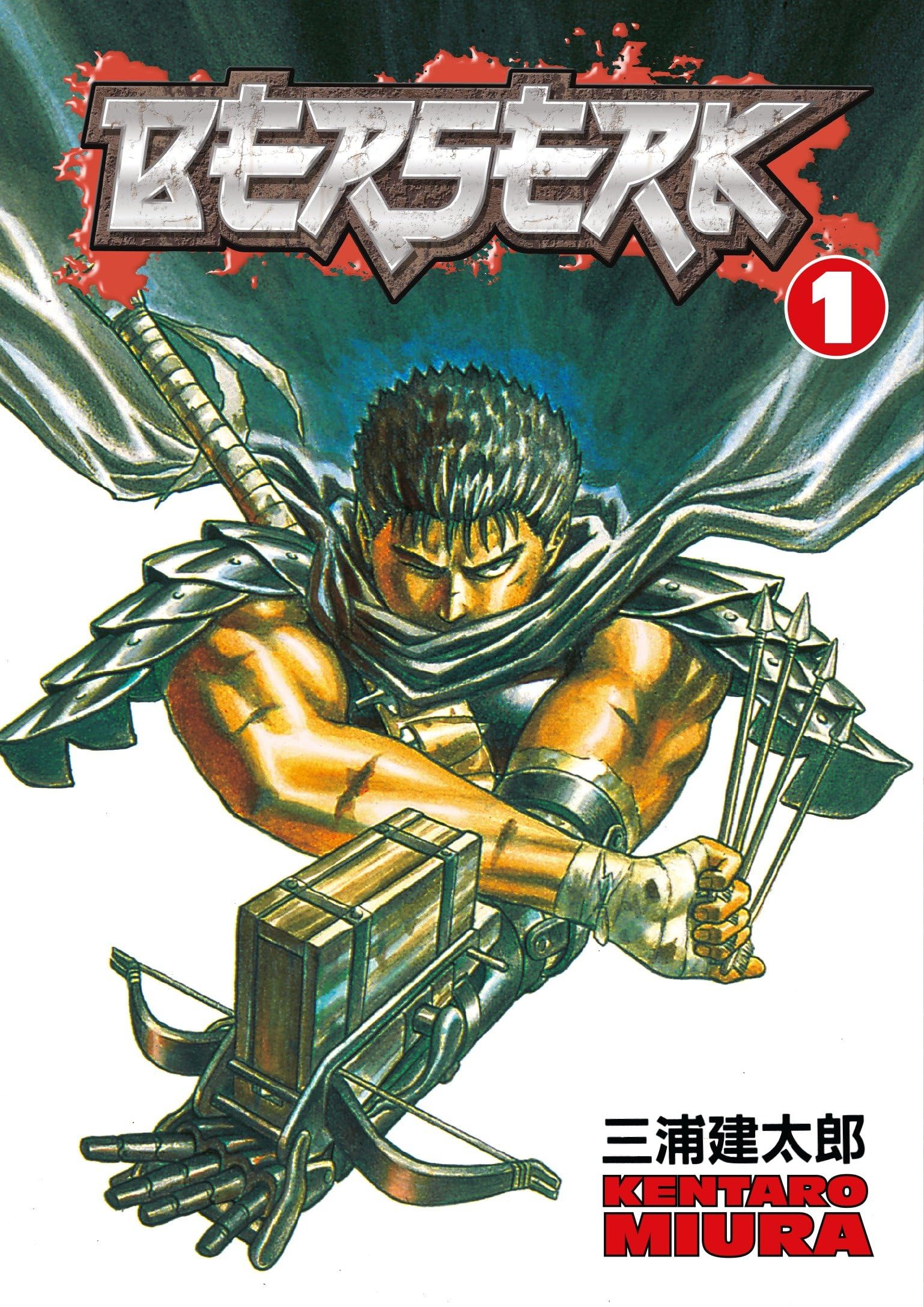
I’ll be honest: Berserk really should have been in the inaugural class. I read Berserk over the course of 2022 and I devoured it. It is, to those in the know, THE dark fantasy manga, to the point of being maybe overexposed in certain circles, although because the recent anime films were quite bad and physical copies of the manga in most book stores are limited to enormous and very expensive luxury hardcovers, probably the series is still underread in comic/manga/fantasy generalist circles. Admittedly the series widely touted influence on Dark Souls/Elden Ring designer Hidetaka Miyazaki certainly brought it to many people’s attention on this side of the world, myself amongst them. (What is Berserk? I remember thinking after hearing VaatiVidya say the word. Who is Guts?)
Berserk is the story of Guts, a swordsman fueled by rage to destroy horrific demons that lurk in a medieval european style fantasy world. Over the series you learn his backstory, that he and his companions were betrayed by their beloved leader Griffith in one of the most horrifying and genuinely upsetting (biggest possible content warning) scenes in fantasy comics. Scarred by this betrayal, Guts abandons his love, the real biggest victim of Griffith’s betrayal, and becomes a tool of vengeance, abandoning his humanity. Over the course of the series, Guts is slowly brought back to humanity by the friendship of his newfound companions, and eventually begins to become a person again.
Tragically, Kentaro Miura died in 2021, passing just as the series seemed to be approaching a turning point, a road towards possible closure. Since then some of his close collaborators have continued the series. Is it good? I don’t know - I read one volume of the resumed series (which was fine I think?) and let it rest there. Maybe I’ll go back one day, but I think even if it remained unfinished, Berserk remains a towering monument of dark fantasy that everyone working in the space will be chasing for as long as people are writing and drawing in the genre.
Nausicaä of the Valley of the Wind by Hayao Miyazaki
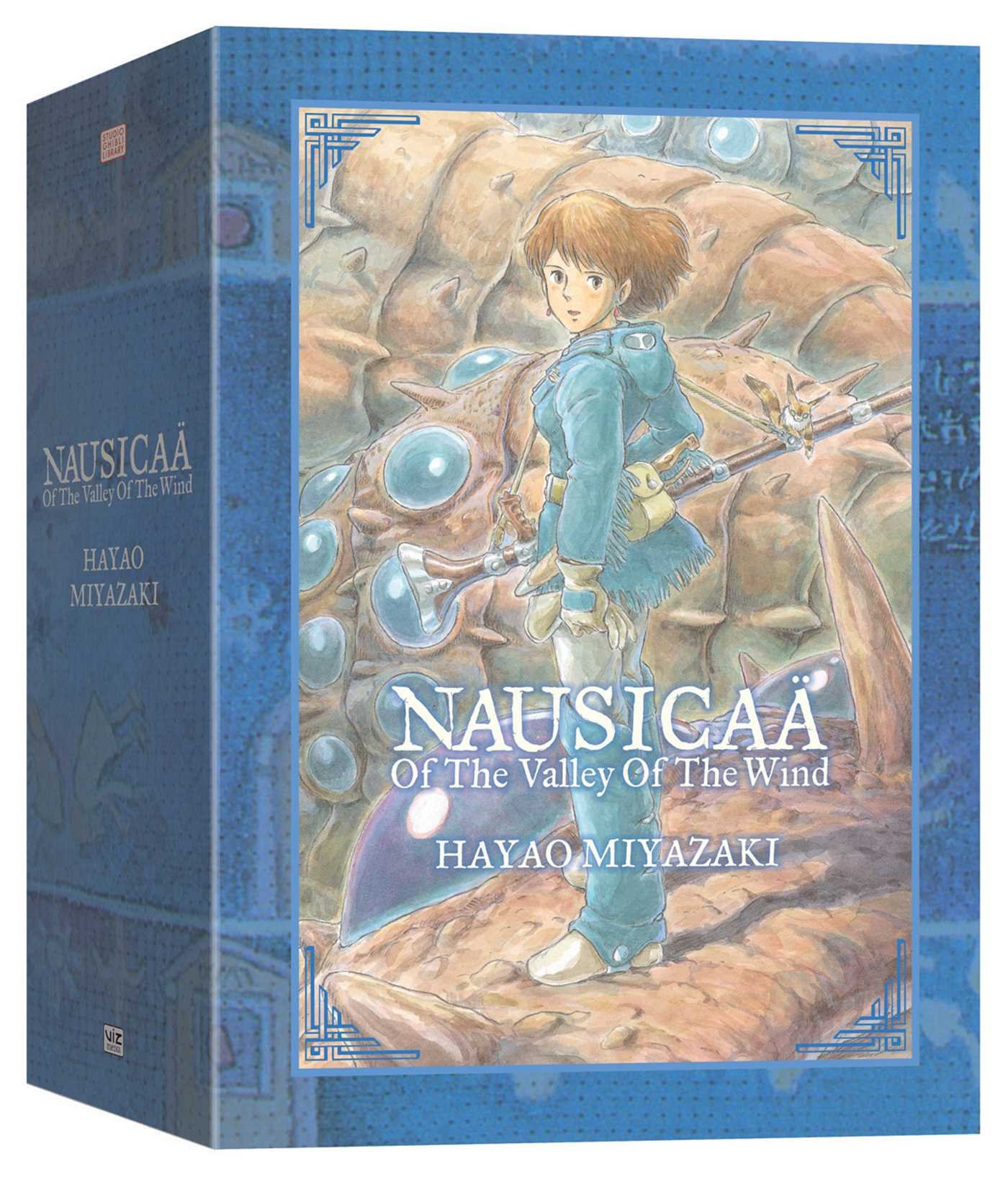
Somehow, despite being the most major comics work of the most acclaimed and popular anime director of all time, Nausicaä of the Valley of the Wind is undoubtedly underread. The popular (and excellent) film adapts only the first portion of the story, and while good, does not approach the comic’s peaks of emotional, narrative, or conceptual depth.
Nausicaä is environmental science fiction of the first order, a science fantasy set in a far post-post apocalypse where human beings scrabble out a difficult life in the portions of the world that remain habitable after industrial civilization in the distant past collapsed in an environmental catastrophe that poisoned much of the world. Nausicaä, the protagonist, is gifted with a connection to the strange insect life that dominates the poison mushroom forests that are slowly growing, threatening to consume the small portions of the world that humans can still survive in. In the comic, she travels across the world, interacting with warring feudal kingdoms and meeting nomadic groups and ancient religions that maintain lost connections to the distant past of humanity.
While I won’t spoil the final plot twists here, ultimately the story is about greed and selfishness of modernity and our disregard for and claim of ownership over the natural world, and how that effectively acts as a callous violence towards our distant descendants and successors, a curse that will lay upon our sons and daughters for a thousand generations. Also there are cool rideable ostrich things AND lots of very neat vehicles, tanks and flying machines especially. Genuinely one of the finest works of science fiction of the 20th century in any medium.
NEXT TIME
In Part 2, we induct a legendary fantasy series by a Grandmaster of Science Fiction, one of the biggest fantasy manga sensations of the last 10 years, and one of the most important fighting manga of all time.
Link and Recommendations:
If you haven't read it yet my first Zine, Hinterlands #1, is available free on itch here.
As referenced above, book related youtube videos are a project I'm aiming to take on this year. My first video, a recap of my favourite first time reads of 2025, is taking longer than expected. Still, I expect to reach the finish line soon. Videos will be posted here
Making a Classic Traveller Sector Map in QGIS: I work with GIS software a lot in my day job, and so this blog post on how to use freeware to procedurally generate a setting for the classic space RPG Traveller caught my eye. Lots of TTRPG focused mapping software can be good inspiration or fuel for speculative fiction writing (as long as you get around to the writing part eventually!), and this presents a similar (and free) option for a science fiction setting. Neat!
Okay bye!